


How Youth Social Service Groups Empower Poor Children
- Happy Faces Vadodara
- Nov 27, 2025
- 5 min read

In a country as diverse and populous as India, poverty continues to be one of the biggest barriers to quality education. For millions of poor children across urban slums, rural villages, and remote areas, going to school is not a guaranteed right it is a distant dream. However, amid these challenges, a powerful force is rising: youth. Across India, youth social service groups are taking it upon themselves to ensure that poor children get the education and support they deserve. These youth-led initiatives, often working in partnership with NGO social service organisations, are not only changing lives but are also shaping a better future for the nation.
Why Education Matters for Poor Children
Education is the foundation of progress. For poor children, education is more than academic learning it is a pathway to dignity, self-reliance, and opportunity. When a child from an underprivileged background gets access to consistent, quality education, it changes everything. It reduces the chances of child labour, early marriage, and exploitation. It increases the chances of a stable income, better health, and informed decision-making in adulthood.
Unfortunately, children from low-income families face several hurdles when it comes to education. From financial instability and lack of resources to social discrimination and the absence of proper schools, the barriers are complex and deeply rooted. Government schemes exist, but they are often not enough. This is where youth social service organisations are making a real difference on the ground.
The Role of Youth in Social Service
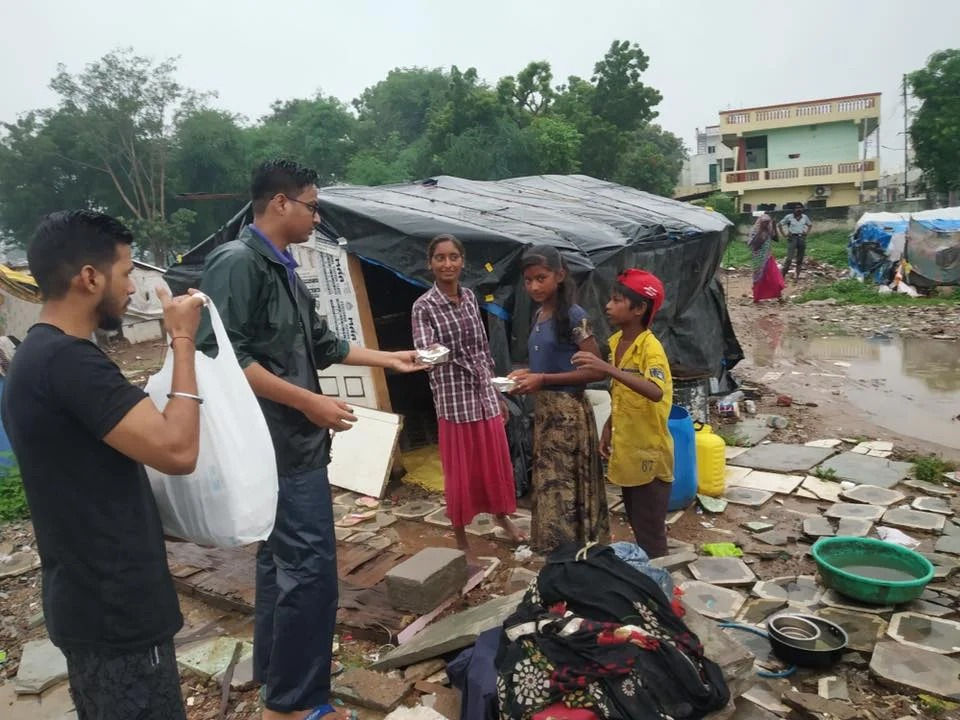
India has one of the largest youth populations in the world. With energy, passion, and a strong sense of purpose, young people are stepping forward to take charge of social issues. Many college students, working professionals, and local volunteers are forming youth social service groups to bring about meaningful change in their communities.
These groups work at the grassroots level, often with minimal resources but maximum commitment. Their work is not limited to charity it is focused on empowerment. By targeting education for poor children, they are addressing the root of poverty rather than just the symptoms.
How Youth Social Service Groups Help Poor Children Learn
Youth social service groups play a crucial role in reaching children who are otherwise left out of the formal education system. Here’s how they are making an impact:
1. Free Tuition and Bridge Classes
Many children from poor families attend government schools but struggle with learning due to poor teaching quality or irregular attendance. Youth volunteers organise free tuition classes in evenings or weekends to help these children catch up with their studies. In some cases, they run “bridge” courses to help out-of-school children re-enter formal education.
2. Providing Learning Materials
Something as simple as a school bag, notebook, or pencil can be unaffordable for poor families. Youth social service organisations often run donation drives to collect school supplies, uniforms, and textbooks, and distribute them among needy children.
3. Mentoring and Emotional Support
Children from low-income backgrounds often lack role models or guidance. Youth volunteers not only teach but also mentor these children, building their confidence and helping them dream bigger. Regular interaction with caring, educated young mentors can positively shape a child’s self-image and aspirations.
4. Creating Safe Learning Spaces
In crowded slums or remote villages, there is often no safe or peaceful environment to study. Many youth-led groups create informal learning spaces — sometimes in parks, community centres, or rented rooms where children can study without distraction or fear.
5. Encouraging Girls' Education
In many poor communities, girls are the first to be pulled out of school due to household responsibilities or safety concerns. Youth groups work to raise awareness among parents about the importance of educating girls. They also provide support systems that encourage girls to stay in school and aim higher.
6. Collaboration with NGO Social Service Networks
While youth social service groups are strong in passion and reach, many also partner with established NGO social service organisations for resources, training, and scaling impact. This collaboration ensures that the work being done at the grassroots level gets long-term support and wider visibility.
Real-Life Impact: Stories of Change
Across India, there are countless inspiring examples of youth groups transforming lives through education.
In Hyderabad, a group of engineering students started weekend classes in a nearby slum. What began as five children sitting on a mat in a park grew into a learning centre with over 100 students and regular classes. Today, several of those children have passed board exams and are preparing for college.
In a tribal village in Jharkhand, a youth social service organisation collaborated with an NGO social service group to set up solar-powered evening schools. These schools helped children study after dark in areas with no electricity. Dropout rates reduced, and enrolment rose steadily over two years.
These are just a few examples the change is happening silently across thousands of villages, towns, and city corners. And at the heart of it is the power of youth.

Why Youth-Led Initiatives Work
Youth bring a unique strength to the table:
They relate better with children, forming friendships that go beyond teacher-student dynamics.
They are creative and adaptable, finding innovative ways to teach and engage learners.
They are driven by passion, not just obligation, making their efforts sincere and impactful.
They work closely with communities, earning trust and understanding local needs better than outsiders.
In many ways, youth social service is not just about helping others — it is a form of self-growth. Many volunteers report that teaching poor children has changed their own lives, taught them empathy, and given them a sense of purpose.
The Road Ahead
While youth-led efforts are commendable, they cannot be a substitute for systemic change. What they can do, however, is bridge gaps, build momentum, and demonstrate what is possible. To maximise impact, it is important that youth social service groups receive encouragement, recognition, and support from government bodies, educational institutions, and NGOs.
Digital tools, online learning platforms, and community-based teaching models can be integrated into youth-led initiatives to make learning more effective. Skill development, career counselling, and life skills education can also be added to make the learning experience more holistic
.
Conclusion: Small Steps, Big Impact
Helping poor children through education is not just about teaching them to read and write it is about restoring their right to dream, to achieve, and to live with dignity. Youth social service organisations are proving that change doesn’t always require big budgets or policies sometimes, all it takes is a willing heart and a few hours every week.
As citizens, we have a responsibility to support these efforts, whether by volunteering, donating, or simply spreading the word. The future of India depends on its children and empowering them through education is the most powerful gift we can give.


Comments